
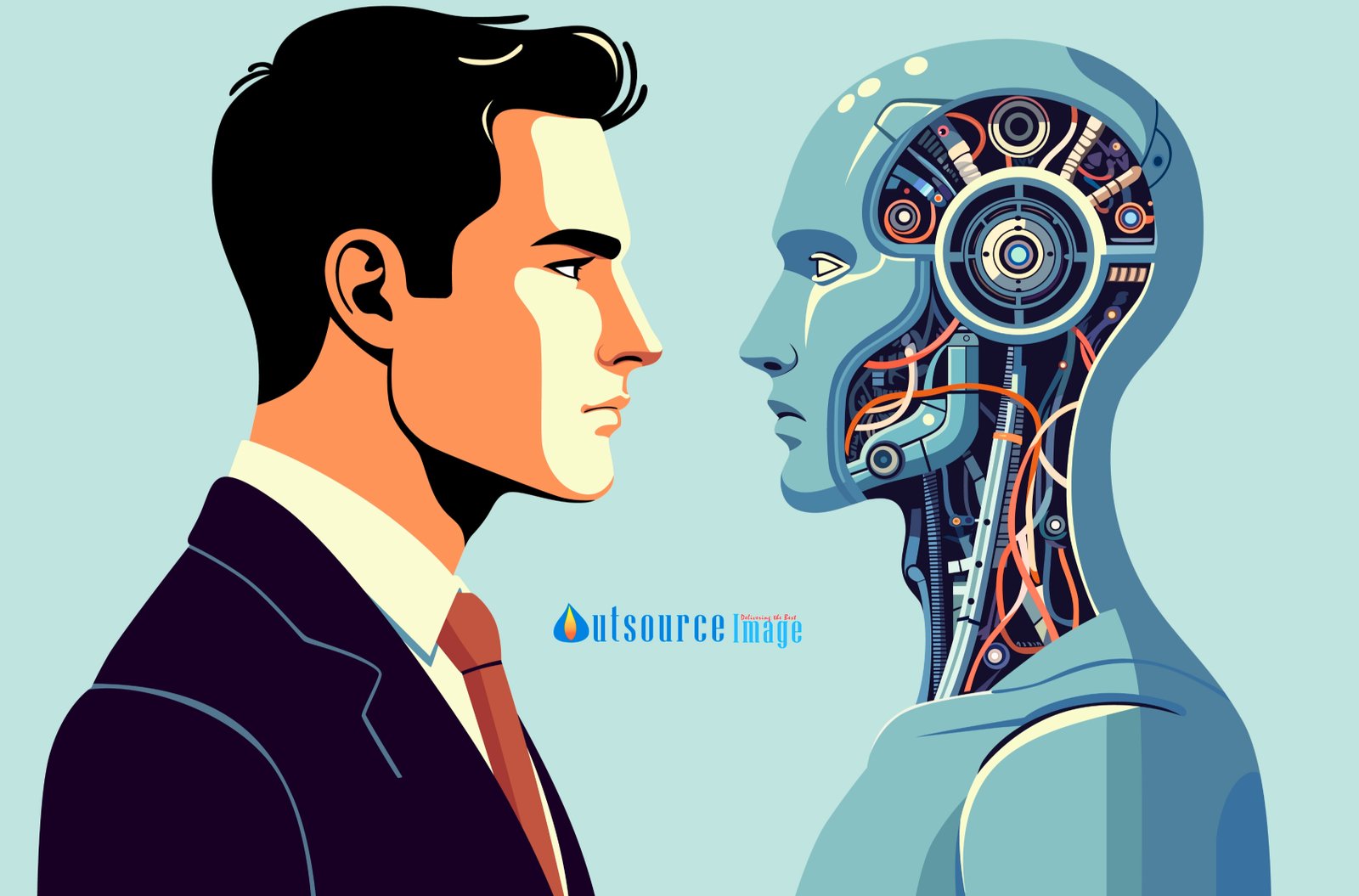
The debate between AI vs human editing is transforming the image editing industry. Furthermore, rapid advancements in artificial intelligence mean AI tools can now perform tasks that once required human expertise. Therefore, as businesses seek efficiency and scalability, the AI vs human editing debate becomes more relevant than ever. Moreover, at Outsource Image, we combine the best of both worlds to deliver outstanding results for every client.
1. Speed and Efficiency
AI tools can process large volumes of images quickly. Therefore, they are ideal for tasks like background removal, colour correction, and resizing. Furthermore, they operate 24/7 and deliver instant results. However, human editors bring a level of care and consideration that AI currently lacks. As a result, complex edits still benefit greatly from the human touch.
2. Consistency and Accuracy
AI: AI ensures consistent results by applying the same algorithms and presets to every image. This is particularly useful for e-commerce businesses that require uniformity across thousands of product photos.
Human Editors: Humans can sometimes introduce inconsistencies, but they also offer the ability to adapt editing styles to suit different contexts or artistic visions.
3. Creativity — Where Human Image Editing Beats AI
AI: While AI can mimic certain styles and follow patterns, it lacks true creativity. It struggles with nuanced decisions and may misinterpret artistic intent.
Human Editors: Human editors excel in creative and subjective areas of editing. They can make artistic choices, apply trends, and understand the emotional impact of an image.
4. Cost and Accessibility
AI editing tools are often more affordable, especially for basic editing needs. Therefore, subscription-based models make them accessible to small businesses. Furthermore, hiring professional editors can be more expensive. However, the quality and personalisation they provide often justify the investment. As a result, many businesses choose a mix of both.
5. Flexibility and Customization
AI: AI offers limited customization and works best with standard editing tasks. Custom workflows and highly detailed edits can be challenging.
Human Editors: Human professionals can easily adjust to client preferences, feedback, and specific requirements, offering a tailored approach.
6. Scalability for Large Projects
AI: AI is highly scalable, handling bulk image processing effortlessly. It’s perfect for industries like e-commerce, real estate, and media.
Human Editors: While scalable, human-based services require more time and coordination, especially for large-scale projects.
7. Error Handling and Quality Control
AI: AI tools may occasionally make mistakes—misidentifying elements or over-editing areas—without recognizing the error.
Human Editors: Humans are better at spotting subtle issues and making corrections during the editing process, ensuring higher-quality outputs.
8. Integration with Workflows
AI: Many AI tools integrate seamlessly with existing platforms, offering automation and cloud-based editing solutions.
Human Editors: Human editors can work within diverse project management systems but may require more manual coordination.
The Future of AI vs Human Image Editing — A Hybrid Approach
The future of image editing outsourcing likely lies in a hybrid model—leveraging the speed and scalability of AI with the creativity and critical thinking of human editors. Businesses can use AI for routine tasks and rely on humans for complex, brand-focused, or emotionally driven edits.
Conclusion — AI vs Human Image Editing at Outsource Image
AI is revolutionizing the image editing industry, offering unprecedented speed and efficiency. However, human editors remain essential for creativity, quality, and personalization. The most successful outsourcing strategies will combine the strengths of both, ensuring optimal results and adapting to the evolving needs of clients and industries. For more insights on AI in creative industries, visit the Adobe blog at blog.adobe.com