
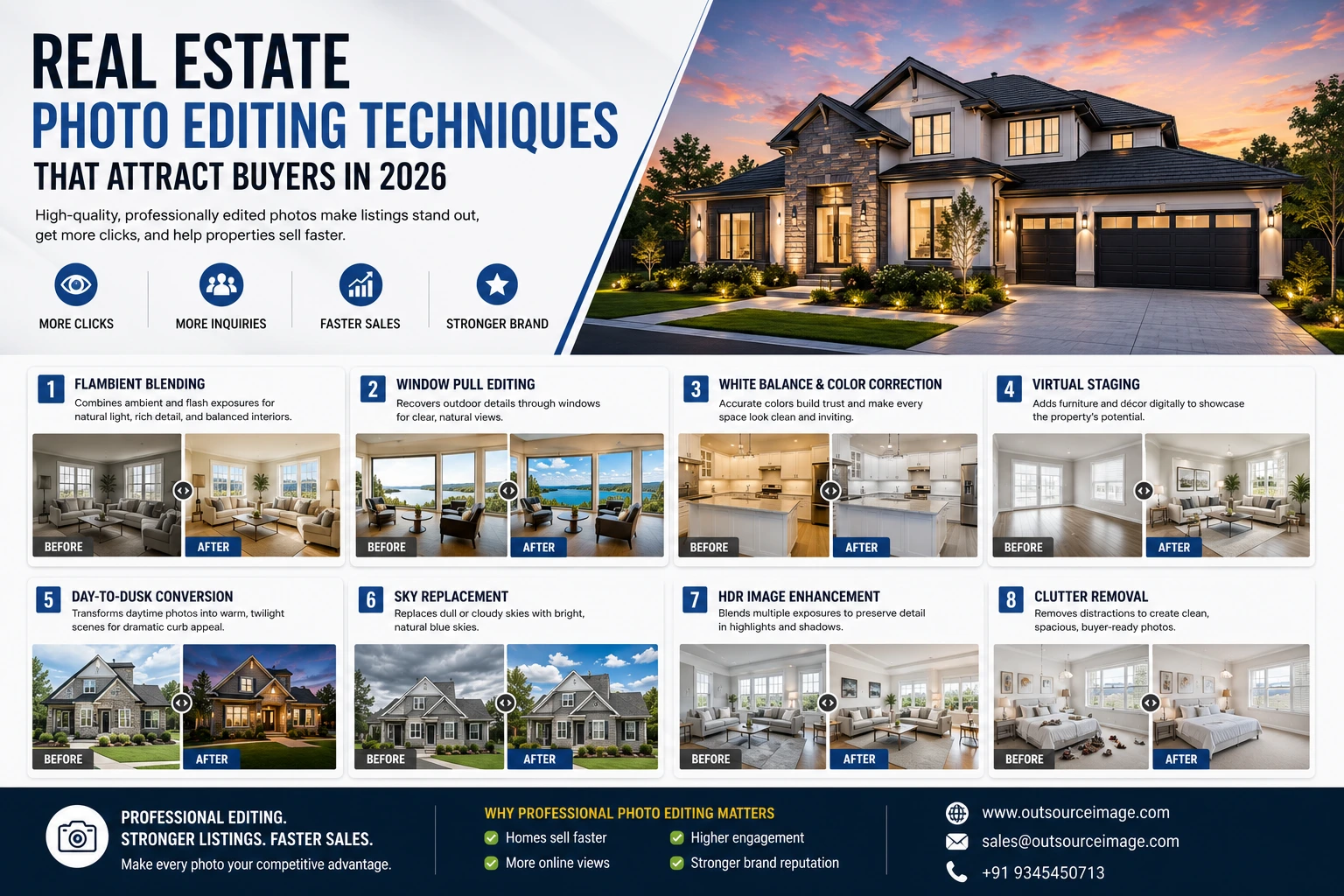
In today’s digital-first real estate market, the first property showing doesn’t happen at the front door — it happens online. That’s why mastering the right photo editing techniques has become essential for every listing.
Nearly every homebuyer begins their property search on the internet, so high-quality listing photos are one of the most important factors in attracting buyers. The National Association of Realtors regularly publishes research on how buyers search for and evaluate homes online, and photos consistently rank among the features buyers rely on most. In fact, professional real estate photography, combined with expert photo editing, can significantly increase click-through rates, generate more inquiries, and help properties sell faster.
Research shows that buyers often spend several weeks researching properties online before scheduling in-person visits. However, out of dozens of listings, only a handful make it onto their shortlist — which is why professional real estate photo editing is no longer optional. Rather, it’s a competitive advantage.
With that in mind, this guide explores the most effective real estate photo editing techniques for 2026 and explains how they help agents, photographers, and real estate businesses create listings that stand out.
Why Professional Photo Editing Techniques Matter
To begin with, professional photography is an investment that can deliver measurable results. According to industry research and market data:
- Listings with professional photos tend to sell faster than listings with amateur photos
- High-quality images generally generate more online views
- Better visuals increase buyer engagement and property inquiries
- Professional presentation strengthens an agent’s brand reputation
(That said, figures vary by market and source, so treat specific percentages you see elsewhere with some caution and check the original study before citing them.)
Ultimately, when buyers compare multiple listings, image quality often determines which property they choose to visit in person.
1. Flambient Blending: The Gold Standard for Interior Photography – Photo Editing Techniques
One of the most effective editing techniques used by professional real estate editors is the flambient method, which combines:
- An ambient-light exposure
- A flash exposure
In other words, this workflow blends the warmth of natural lighting with the clarity of flash photography.
Benefits:
- Natural-looking colors
- Reduced image noise
- Better shadow detail
- Crisp interior finishes
- Magazine-quality photographs
So, rather than relying on flash alone or ambient light alone, flambient editing produces balanced, realistic interiors that appeal to buyers.
2. Window Pull Editing for Crystal-Clear Views
Bright windows often appear completely blown out, because camera sensors can’t capture both a dark interior and a bright exterior in a single exposure.
Fortunately, a window pull solves this problem. First, photographers capture a separate exposure for the outdoor scenery; then, editors blend it into the interior image during post-production.
Advantages:
- Preserves outdoor views
- Maintains architectural accuracy
- Creates premium, luxury-listing-quality photos
- Eliminates overexposed windows
As a result, window pull editing is especially valuable for homes with scenic landscapes, gardens, city skylines, or waterfront views.
3. White Balance and Color Correction Photo Editing Techniques
Above all, accurate color is essential for building buyer trust. For example, incorrect white balance can make:
- Hardwood floors appear orange
- White walls look yellow
- Marble surfaces appear gray
- Paint colors look unrealistic
Therefore, professional color correction restores natural tones so every room appears bright, clean, and inviting.
Why shoot in RAW?
Because RAW files preserve significantly more image data than JPEGs, they let editors:
- Recover highlight details
- Correct white balance more accurately
- Improve shadow detail
- Maintain maximum image quality
Overall, RAW images provide much greater flexibility during post-production than compressed formats.
4. Virtual Staging: The Smart Alternative in 2026
Empty rooms often feel smaller and less inviting than furnished ones. To address this, virtual staging digitally adds furniture, décor, and accessories to showcase a property’s potential.
Additionally, modern AI-assisted workflows now produce realistic staged interiors at a fraction of the cost of traditional, in-person staging.
Benefits of virtual staging:
- Lower marketing costs
- Faster turnaround
- Increased buyer engagement
- Better online presentation
- Well suited to vacant properties
Even so, professional editors keep furniture placement realistic and proportional while preserving the property’s original architecture. Also, many MLS boards require disclosure that a photo has been virtually staged, so it’s worth checking your local rules.
5. Day-to-Dusk Conversion Photo Editing Techniques
Generally, twilight images attract more attention than standard daytime photos. Specifically, a well-edited day-to-dusk conversion transforms a daylight image into a warm evening scene featuring:
- Rich blue skies
- Warm interior lighting
- Balanced exterior brightness
- Enhanced curb appeal
Consequently, these dramatic “hero” images can generate higher click-through rates on property portals and social media.
6. Sky Replacement
Of course, weather isn’t always cooperative, and cloudy skies can make even a beautiful home appear dull. To solve this, professional sky replacement swaps a gray, overcast sky for a bright, natural blue one while keeping lighting and reflections realistic.
Benefits include:
- More attractive listings
- Better visual consistency across a listing set
- Increased buyer interest
- A more professional appearance
7. HDR Image Enhancement
Similarly, High Dynamic Range (HDR) editing combines multiple exposures to preserve detail in both highlights and shadows. As a result, HDR enhancement helps reveal:
- Interior textures
- Exterior landscaping
- Ceiling details
- Window views
Still, when edited naturally, HDR images appear bright and detailed without looking artificial or over-processed.
8. Object Removal and Image Cleanup
Even small distractions can reduce a property’s visual appeal. Accordingly, professional retouching removes things like:
- Cars
- Trash bins
- Garden clutter
- Electrical cords
- Personal belongings
- Pet items
- Wall marks and minor imperfections
In the end, the result is a cleaner, more inviting presentation that keeps buyers focused on the property itself.
9. Perspective and Vertical Correction
Because wide-angle lenses often create distorted walls and leaning vertical lines, professional perspective correction straightens:
- Walls
- Doors
- Windows
- Cabinets
- Building exteriors
As a result, this produces clean, balanced images that accurately represent the property’s true proportions.
10. Image Sharpening and Detail Enhancement
Finally, the last editing stage improves image clarity while keeping a natural appearance. During this stage, editors fine-tune:
- Texture
- Sharpness
- Contrast
- Brightness
- Color consistency
Altogether, the result is a polished image suitable for MLS listings, brochures, websites, and social media.
Photo Editing Techniques Start With Better Photography
Of course, even the best editing starts with quality photography. So, before you shoot, keep these professional tips in mind:
- Shoot in landscape orientation
- Use a sturdy tripod
- Photograph from roughly waist height
- Turn on all interior lights
- Open curtains and blinds
- Declutter every room before shooting
- Capture multiple exposures per scene
- Shoot in RAW whenever possible
In short, these practices give editors the best raw material to work with during post-production.
Why Outsource Real Estate Photo Editing?
For this reason, many photographers and real estate agencies choose to outsource their editing to a professional service like Outsource Image to save time and maintain consistent quality. Specifically, professional editing services can offer:
- Faster turnaround times
- Consistent image quality across a portfolio
- Advanced editing expertise
- Cost-effective workflows
- Scalable capacity for high-volume projects
As a result, by outsourcing editing, photographers can focus on client relationships and growing their business while experienced editors handle post-production.
Conclusion
In 2026, professional real estate photo editing is an essential part of successful property marketing. For instance, these photo editing techniques — flambient blending, window pulls, HDR enhancement, sky replacement, virtual staging, object removal, perspective correction, and day-to-dusk conversions — help listings capture attention and generate buyer interest.
In short, whether you’re a real estate photographer, agent, or marketing agency, investing in professional photo editing can improve listing performance, strengthen your brand, and help properties sell faster in a competitive market. If you’re ready to get started, visit Outsource Image to see how our editing team can help.
Frequently Asked Questions
1. Why is professional real estate photo editing important?
Overall, professional editing enhances image quality, attracts more buyers, increases online engagement, and can help properties sell faster.
2. What is flambient editing?
Essentially, flambient editing combines flash and ambient-light exposures to produce natural-looking interiors with accurate colors and balanced lighting.
3. Is virtual staging better than traditional staging?
Generally, virtual staging is more affordable and faster, and it can produce realistic results that help buyers visualize an empty space. However, some buyers still prefer seeing a physically staged home in person, so it’s worth checking whether your local MLS requires disclosure of virtually staged photos.
4. Why should photographers shoot in RAW?
Because RAW files retain more image information, they make it easier to recover highlights, adjust white balance, and produce higher-quality edits.
5. How many images should a property listing include?
Typically, most residential listings work well with roughly 15–30 professionally edited photos, depending on the property’s size and features.
Get in touch:
- Website: outsourceimage.com
- Email: sales@outsourceimage.com
- Phone: +91 9345450713